 By
By Google lit up the Las Vegas Sphere at CES 2026 with an Android XR animation. It was, by all accounts, a spectacle. But spectacles are easy. The harder question, the one that actually matters for anyone who cares about spatial computing as a medium and not just a product category, is whether Google can build the platform layer that makes content worth making.
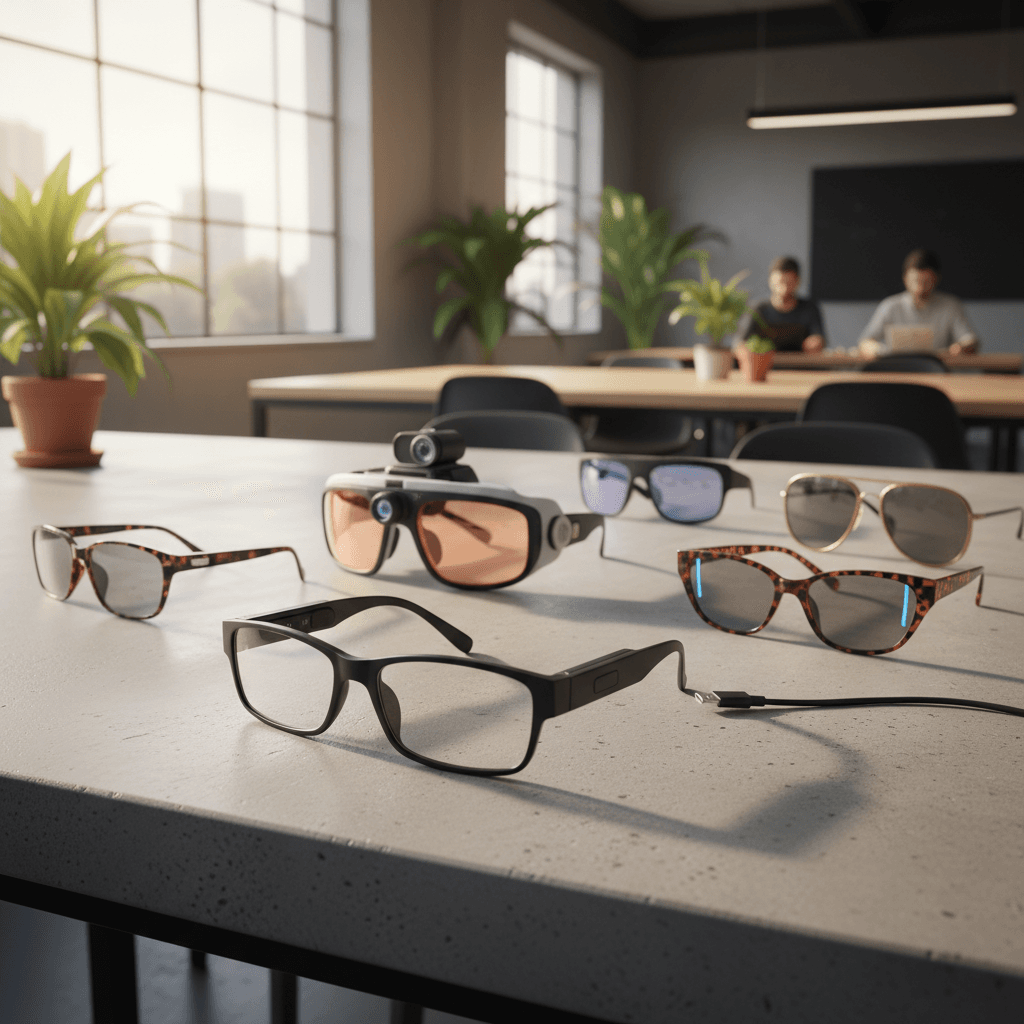
Five months after Samsung shipped the $1,800 Galaxy XR headset as the first Android XR device, Google is now pushing hard into glasses territory with at least five Android XR devices expected in 2026, according to Next Reality. That includes display glasses from Samsung and Xreal, plus non-display AI glasses from Warby Parker and Gentle Monster. The bet is clear: Android XR wants to be for spatial computing what Android was for smartphones.
I've been covering this space long enough to know that every platform makes that claim. What's different here is the structural argument.
The open platform play
Right now, if you're a developer building for XR, your choices are fragmented. Meta controls roughly 71% of XR headset market share, according to Next Reality, but their ecosystem is gaming-first, social-second. Apple carved out a premium position with the $3,499 Vision Pro, but adoption has been limited by that price tag. Neither offers what Android historically provided to mobile: an open platform that multiple manufacturers can build on, with a shared app distribution layer.
Android XR is designed to be that layer. Google's developer documentation already supports Unity, Godot, Unreal Engine, OpenXR, and WebXR, per Google's developer site. Existing Android apps on the Play Store can opt in to Android XR and run with built-in compatibility, no rewrite required. That's a meaningful structural advantage. Instead of begging developers to build from scratch for yet another headset, Google is telling them: your apps already work here. Now make them spatial.
The Google-Xreal partnership is the most concrete expression of this strategy. Android Central reported in January 2026 that the two companies are co-developing hardware roadmaps and aligning software features with physical design, ensuring Android XR apps work as expected when projected into real space. Their first product together, Project Aura, features a 70-degree field of view with optical see-through technology, according to Google's blog, with dev kits shipping ahead of a 2026 consumer launch.
What Gemini changes about content
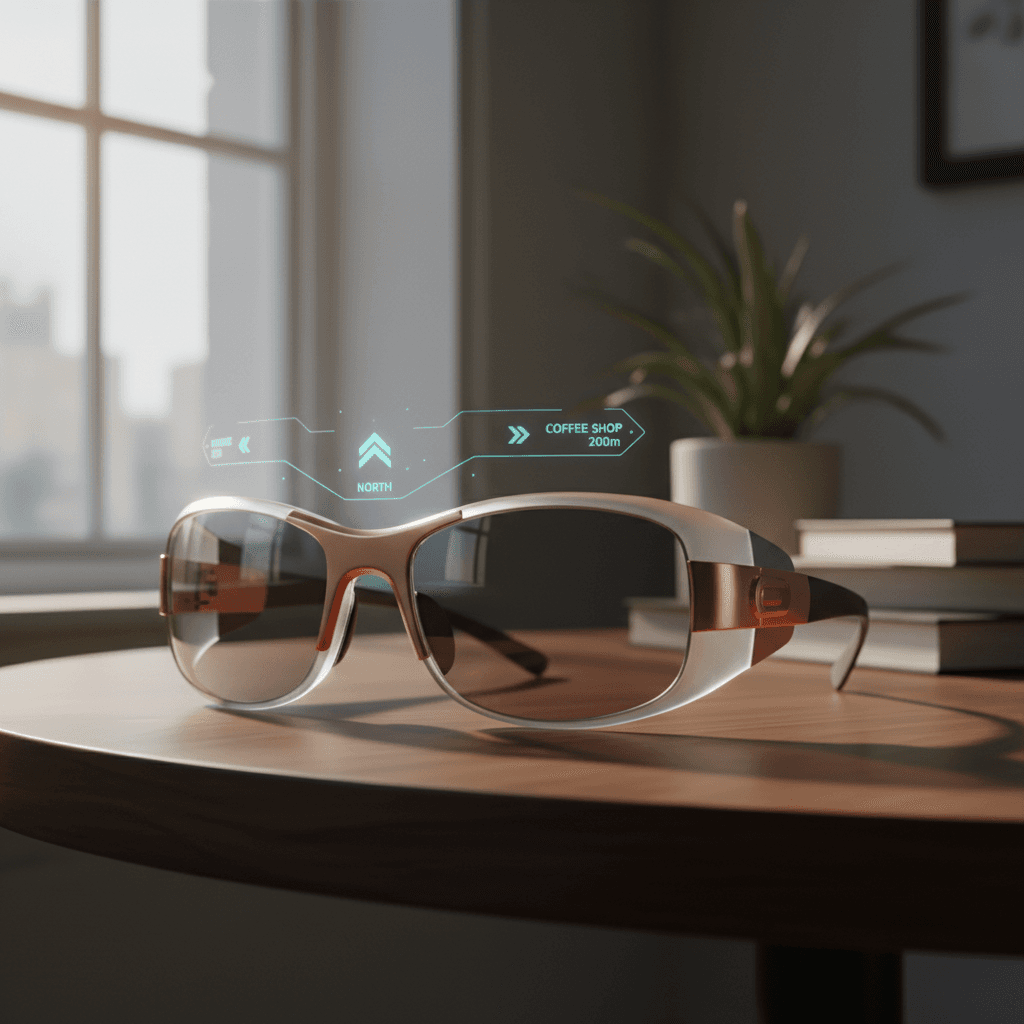
The hardware specs matter, but the real shift is in how AI reshapes what XR content can even be. During demos, Google showed Gemini on Android XR glasses identifying real-world objects, TechSpot reported, translating signs on-the-fly from English to Farsi to Hindi without manual language switching, and overlaying turn-by-turn navigation as a heads-up display. In one demo, Chrome Unboxed noted, the glasses identified a vinyl album the wearer was looking at and offered to play a track from it.
These aren't parlor tricks. They're examples of context-aware computing, where the device understands what you're looking at and responds without being prompted. Google also demonstrated a persistent visual memory feature where Gemini tracks where you've placed items in your home and can guide you back to them later, Next Reality reported.
For content creators, the implication is significant. If the platform itself is AI-native, the types of experiences you can build shift from "app you launch" to "layer that's always there." That's a fundamentally different design paradigm than what Meta Quest or Vision Pro currently offer. Whether developers actually build for it is a separate question, but the capability framework is more ambitious than anything else in the market right now.
The entertainment gap nobody talks about
Here's my concern. Google's pitch is almost entirely about utility: navigation, translation, object identification, productivity. Samsung bundled the Galaxy XR launch with NFL PRO ERA from Status Pro and Project Pulsar from Adobe, Tom's Guide reported. Those are fine launch titles. But "fine" doesn't prove that spatial computing is its own medium.
Meta, for all its platform limitations, has a content library that includes titles where presence actually means something, where the design choices only make sense in a headset. Google's Android XR doesn't have that yet. And backward compatibility with flat Android apps, while smart for adoption, could actually work against spatial-native design. If developers can ship a 2D app that "just works" on the headset, where's the incentive to build something that uses depth, embodiment, and spatial audio in ways that justify wearing hardware on your face?
This is the tension at the heart of Android XR's content strategy: openness drives adoption, but it can also breed laziness. The best XR entertainment has always come from creators who design for presence first, not from ports of existing flat-screen experiences.
The numbers and what they mean
Analysts project AR glasses unit sales will hit 6.93 million units in 2026, a 47% year-over-year increase, AR Insider data via Next Reality indicates. The broader XR market is valued at $10.64 billion in 2026 and projected to reach $59.18 billion by 2031, according to Mordor Intelligence. Those are growth numbers that attract platform investment. But 2026 looks more like table-setting than arrival. AR Insider's own analysis suggests the real sales inflection comes in 2027, when consumer-ready Snap Spectacles and Samsung Android XR glasses hit retail alongside Meta's next-gen Ray-Ban Display glasses.
So what we're watching right now is a platform preparing the ground, not a platform that's won.
What's next
If Android XR succeeds on its own terms, the most important outcome won't be unit sales or market share. It'll be whether an open platform produces better spatial content than the closed ones. Apple's Vision Pro has gorgeous hardware and a walled garden. Meta Quest has the install base and the gaming library. Android XR has the developer tools and the AI integration.
The missing piece is a creative culture. Someone needs to build the XR equivalent of what early YouTube was for video or what the App Store was for mobile software: a content ecosystem where weird, ambitious, personal work can find an audience. Google has built the plumbing. The question is whether anyone uses it to make something that couldn't exist anywhere else.
I'll believe Android XR is the platform shift when I put on a pair of those Xreal glasses and encounter an experience that makes me forget I'm wearing them, not because the hardware disappeared, but because the content was that good. We're not there yet. But for the first time, the structural conditions for getting there actually exist.
Cole Nakashima covers XR entertainment for The Daily Vibe.