 By
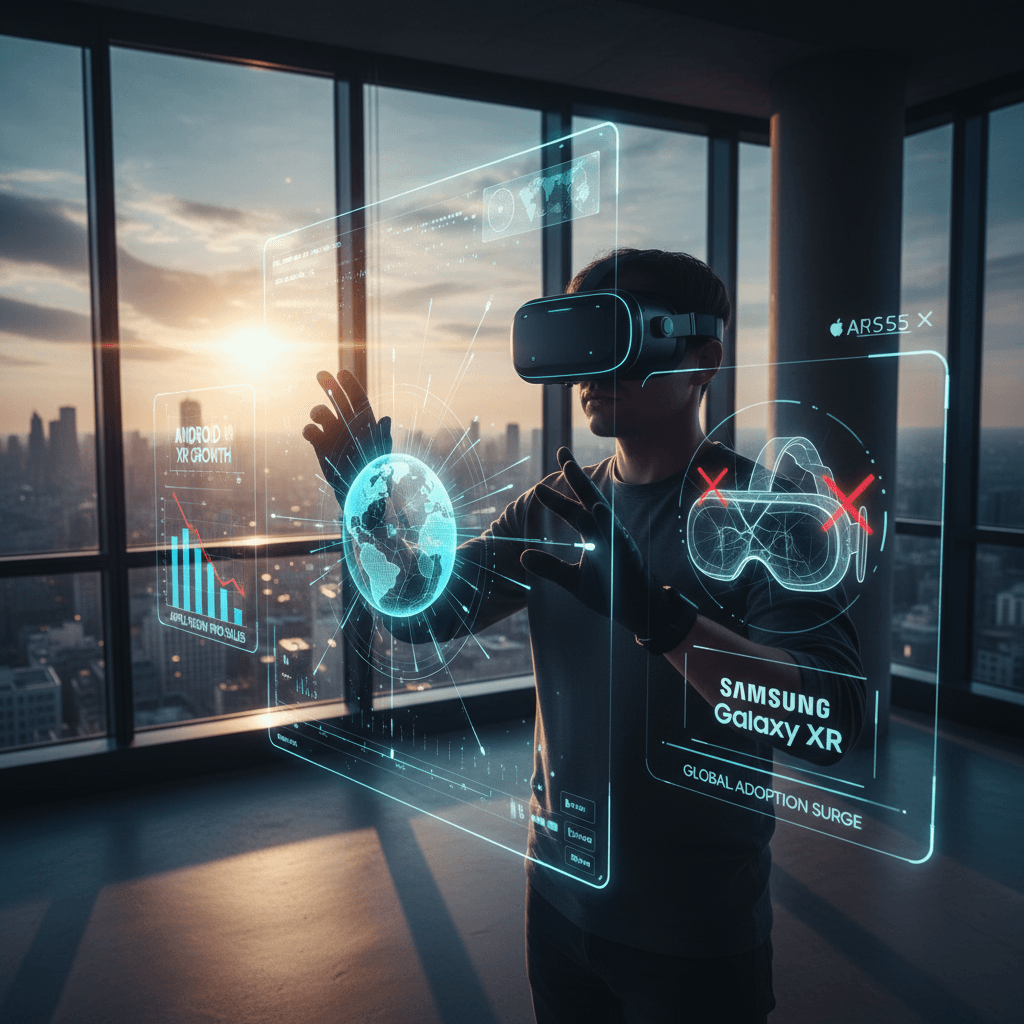
By I've been living in the Samsung Galaxy XR for about five months now. It is, without question, the most interesting headset I've used since the original Quest 2 made standalone VR feel real. And in the last few weeks, Google has quietly dropped a pile of documentation that tells us exactly where Android XR is headed in 2026. Combined with Samsung's confirmed global expansion plans, the picture is getting very clear: Android XR is no longer an experiment. It is a platform play, and it is moving fast.
Let me walk you through what just happened and why it matters.
Samsung takes Galaxy XR worldwide
When the Galaxy XR launched in October 2025, Samsung kept it tight: US and South Korea only. At $1,799 for the 256GB model, roughly half the Vision Pro's $3,499 price tag, it was already the more accessible option. But limited availability kept it from building real momentum.
That changes this year. Reports from SamMobile and multiple outlets confirm Samsung plans to bring the Galaxy XR to Germany, France, Canada, and the UK in 2026, with more markets possible as production ramps up. Four countries might not sound like a flood, but these are big, high-spending consumer electronics markets. Samsung is clearly reading demand signals and scaling manufacturing accordingly.
The expansion matters beyond raw sales numbers. Every new country means new developers building for the platform, new enterprise customers evaluating spatial computing workflows, and new retail presence that normalizes headset computing. The Galaxy XR sitting in a Samsung store in London or Berlin does more for XR adoption than any keynote demo.
Google reveals how Android XR glasses will actually work
While Samsung handles the hardware rollout, Google dropped something arguably more important in February: full design documentation for Android XR glasses. This isn't concept art or marketing renders. This is the actual UI framework developers will build against, and it tells us a lot about where Google's head is at.
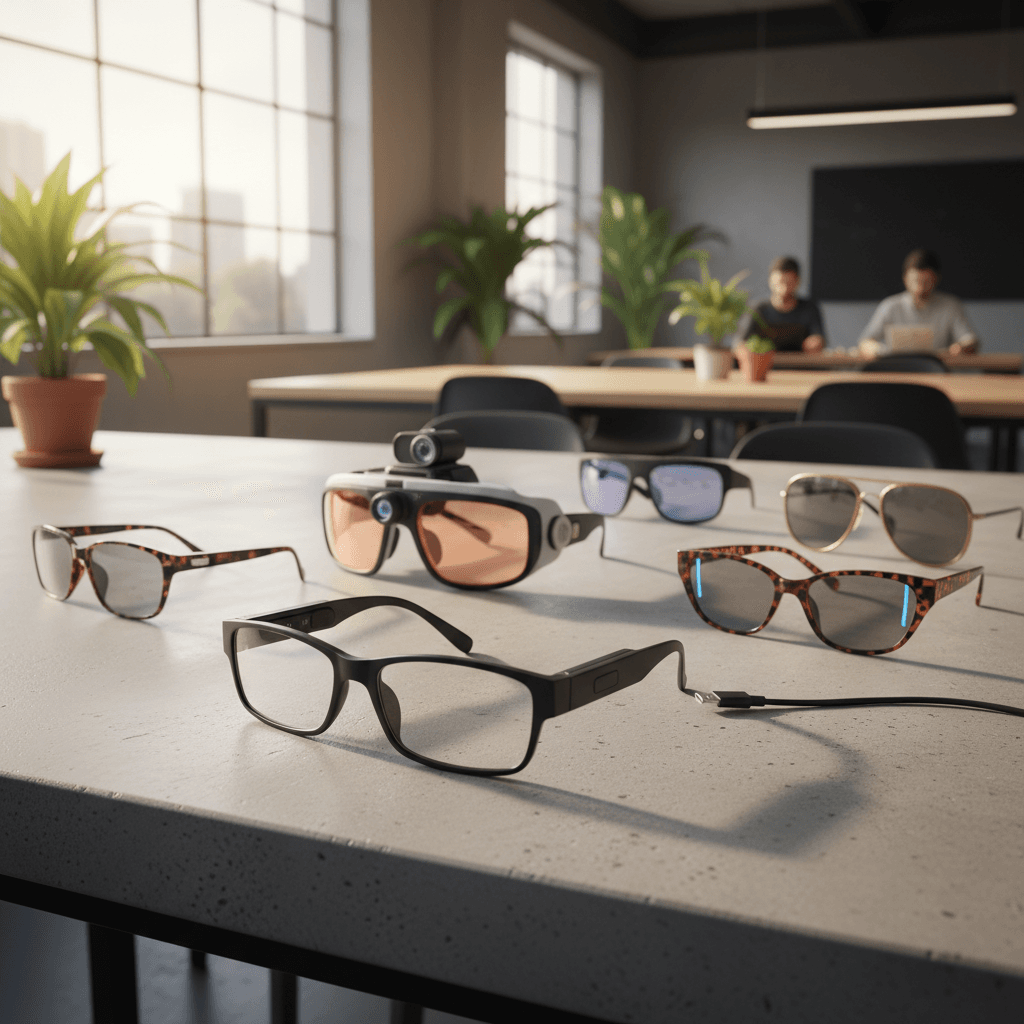
The documentation splits Android XR glasses into two categories. "AI Glasses" are audio and camera only, competing directly with Meta Ray-Bans. "Display AI Glasses" add a small screen, starting with monocular (one-eye) models in 2026, with binocular versions coming later. The smart move here is that every app must work in audio-only mode, so the display is additive rather than required.
Physical controls are straightforward: a power switch, camera button (tap for photo, hold for video), and a touchpad on the temple. For display models, there's an additional button to toggle the screen on and off. The touchpad handles navigation, play/pause, and volume via two-finger swipe. Hold it down and you get Gemini.
And Gemini is everywhere in this stack. It is the primary AI assistant, invoked with a long press on the touchpad or through voice. Google has positioned it as the connective tissue of the entire experience, from turn-by-turn AR navigation to real-time object identification to live translation subtitles. This isn't an afterthought bolted onto a headset OS. It is the core interaction model.
Google's new design language for glasses is called "Glimmer," and the technical constraints driving it are fascinating. Because these are optical see-through displays, color choice directly affects battery life and heat. Green pixels are the most power-efficient; blue burns the most energy. Bright white backgrounds will trigger thermal throttling. Apps are encouraged to use unfilled icons and minimize lit pixels. These aren't aesthetic preferences, they're physics.
Two LEDs on every pair of glasses, one facing the wearer and one facing bystanders, handle the privacy question that killed Google Glass a decade ago. When the camera is active, people around you will know.
The competitive picture is shifting
Here's what makes 2026 so interesting. Apple's Vision Pro production has been halted after dismal sales. IDC estimated Apple shipped just 45,000 units in Q4 2025, a holiday quarter. Luxshare reportedly stopped manufacturing early in the year. Marketing spend was slashed by over 95%. Apple hasn't abandoned the category, but Vision Pro is being quietly repositioned as an enterprise-only device. The consumer XR market Apple was supposed to own is wide open.
Meanwhile, Google lit up the Las Vegas Sphere with Android XR branding during CES 2026. That's not something you do for a side project. That's a statement of intent. Samsung's Galaxy XR is already shipping with features like PC Connect for Windows apps and Google's "Likeness" avatars, and the roadmap is clearly accelerating.
Snap is expected to bring consumer Spectacles to market late in 2026. Samsung's own Android XR glasses will compete with the Meta Ray-Ban ecosystem. The glasses category specifically is about to get very crowded, and Google having a full OS and design framework ready before most hardware ships gives Android XR a structural advantage that's hard to overstate.
For enterprise buyers, IDC expects XR adoption to accelerate through 2026. The Galaxy XR at $1,800 with Gemini integration and a proper Android app ecosystem is a genuinely compelling pitch for companies that looked at Vision Pro's price tag and walked away.
What needs to happen next
Android XR's biggest risk right now isn't hardware or AI integration, it's the app ecosystem. The Glimmer design documentation is thorough and thoughtful, but developers need to actually build for it. Google's Jetpack Compose Glimmer components (buttons, cards, lists, stacks) lower the barrier, but the platform needs a few killer apps that demonstrate why you'd wear these glasses daily rather than just reaching for your phone.
Samsung also needs to prove the Galaxy XR can hold up to sustained daily use. Wired's review noted it "lacks polish" compared to Vision Pro's software refinement. That's fair criticism, and it's the kind of thing that gets fixed with updates, but only if Samsung and Google commit the engineering resources.
The foundation is solid. The pricing is right. The AI integration is deeper than anything else on the market. The global expansion signals confidence. If Google and Samsung execute on the glasses roadmap while continuing to refine the headset experience, 2026 could be the year spatial computing stops being a niche curiosity and starts becoming an actual platform.
I've been waiting for this moment since I strapped on a DK1 in 2013. It feels closer than ever.
Ren Wilder covers mixed reality for The Daily Vibe.