 By
By Put on a Vision Pro and join a two-minute call with a stranger. If it clicks, you both tap to continue. If it doesn't, the call ends and you move on. That's AuraTap, a new social app launching exclusively on Vision Pro on March 27th. It might be the most interesting use of Apple's Persona technology since the headset shipped.
I've been watching the spatial computing social layer develop since the early shared environments on first-gen Quest. From Meta's Horizon Worlds to the VR chat platforms that came before it, the social spatial problem has always been the same: nobody shows up, and the people who do show up are weird. AuraTap is taking a different angle entirely.
What AuraTap actually does
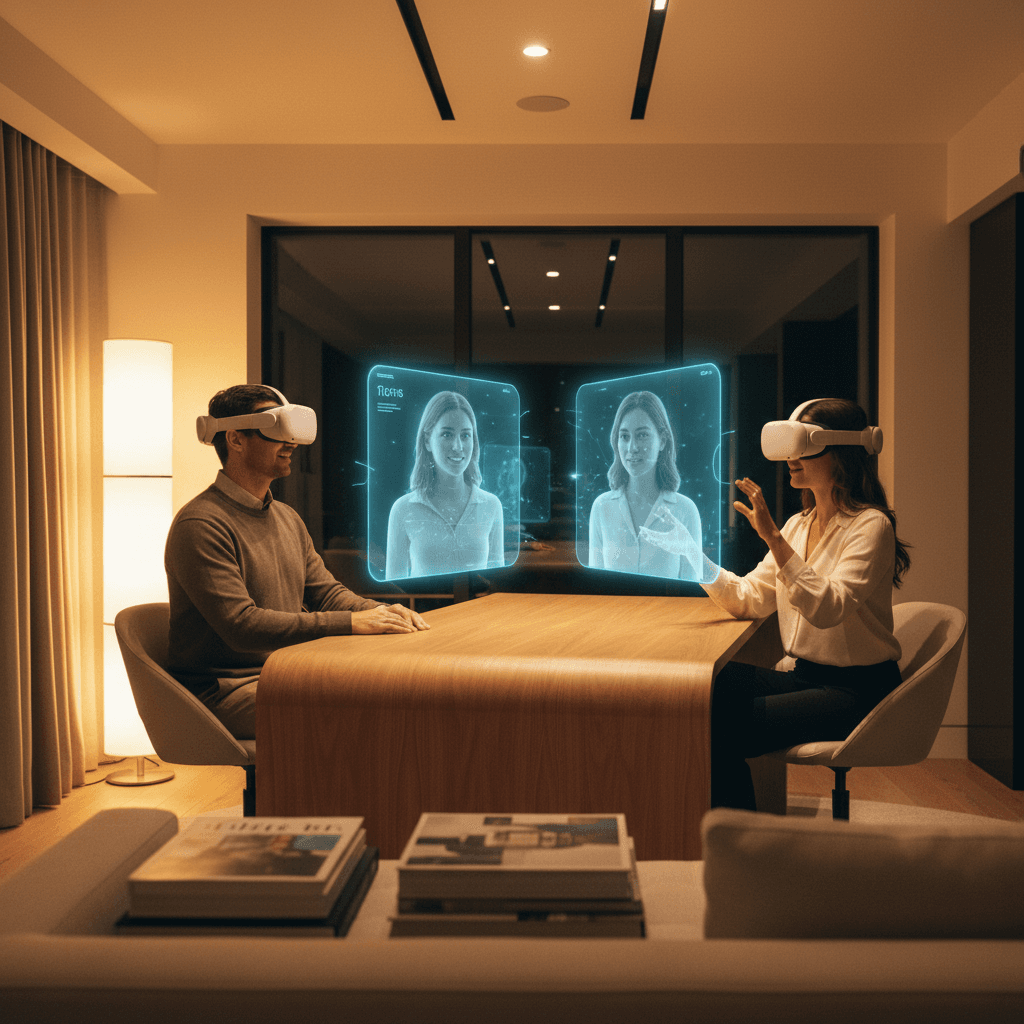
AuraTap isn't a shared virtual world. No avatar lobby, no virtual living room. It's a social network built specifically for Vision Pro owners, where the main interaction is short video calls using Apple's Persona system. Those Personas render photorealistic avatars, complete with eye and mouth tracking, pulled from a face scan the headset captures during setup.
The matching mechanic runs on mutual consent: both users have to tap each other's profile to start a chat. Then the call opens at two minutes. If both people independently choose to extend, the timer disappears and the conversation continues. If one person doesn't want to, it ends cleanly. No awkward hang-up.
The app was founded by Artur Sychov, who also built Somnium Space and the Somnium VR1 headset — so this isn't a first-time XR bet. Design work came from Phil Traut, an iOS and visionOS designer known for the chocolift launcher app.
Why the Persona choice matters
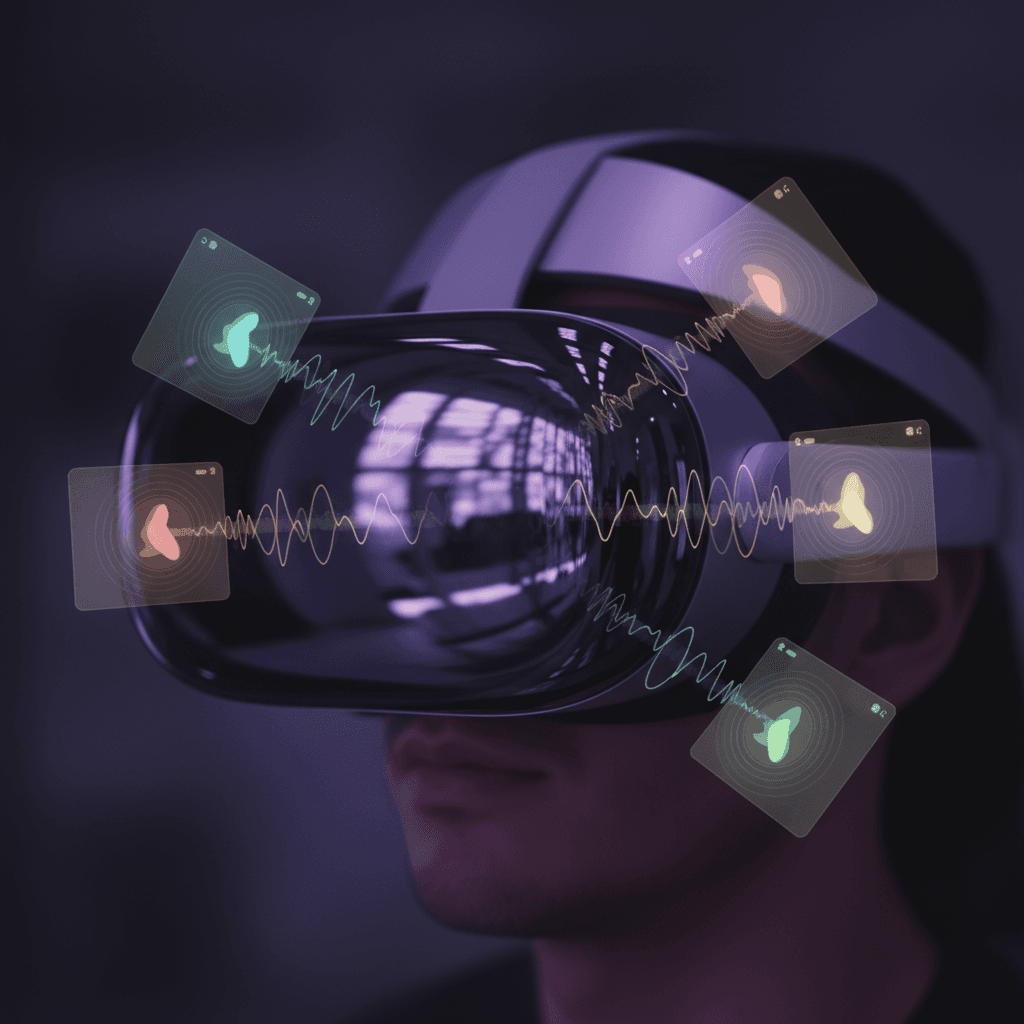
Persona is impressive technology. The face-scanning setup creates an avatar that tracks your expressions in real time — something that would have looked like a tech demo in the Rift CV1 days. The key insight AuraTap is working with: Personas give you an insulating layer of abstraction you don't get from a raw video call, while still being recognizably you.
There's a structural anti-spoofing advantage here too. Personas require scanning a physical face and are stored on the device itself. They can't be exported or shared as files. That's a meaningful hurdle for the fake-identity scams that plague normal social networks, and it's a feature no flat video platform can replicate.
This is the kind of platform-specific thinking that makes me believe the team understands what they're building on. Anchoring the entire social experience to a hardware-locked, biometrically-generated identity system is different from slapping an avatar creator on top of a chat app. It's using the hardware's constraints as design constraints.
What needs to improve
The honest challenge is the one that kills most early spatial social apps: you need people online at the same time. AuraTap's two-minute model works beautifully at scale. At launch, with a user base limited to Vision Pro owners who know the app exists, populating that connection grid is going to be hard. Early multiplayer VR spaces ran into this wall repeatedly, and there's no elegant solution except growing fast enough to hit a functional threshold.
The Vision Pro's install base is a fraction of what Quest has in the market. That's a real ceiling on how quickly AuraTap can build the network density it needs to feel alive rather than empty.
Also worth flagging: the two-minute timer is clever for first contacts, but long-term value depends on whether those connections stick. Building something between a professional networking tool and speed dating is a narrow target.
What this signals
The studio positions AuraTap as a networking tool. The framing makes sense. Mutual consent model, short-form structure, professional angle — this isn't aimed at gaming culture. It's aimed at people who bought a ,499 headset and are still trying to justify it in their daily workflow.
That's a smart slice of the Vision Pro audience to target. If AuraTap can deliver a useful tool for professional connection through spatial computing, it proves something the whole industry needs proven: that spatial presence delivers more than a flat video call in contexts outside entertainment.
I've been tracking spatial social experiments since early Horizon Worlds underwhelmed everyone. AuraTap feels different because it's not trying to be a virtual world. It's trying to be a better first conversation. Whether it can build enough network density to make those conversations happen regularly is the open question — but the design logic is sound.
Launch is March 27th on the App Store.
Ren Wilder covers mixed reality hardware and ecosystems for The Daily Vibe.