 By
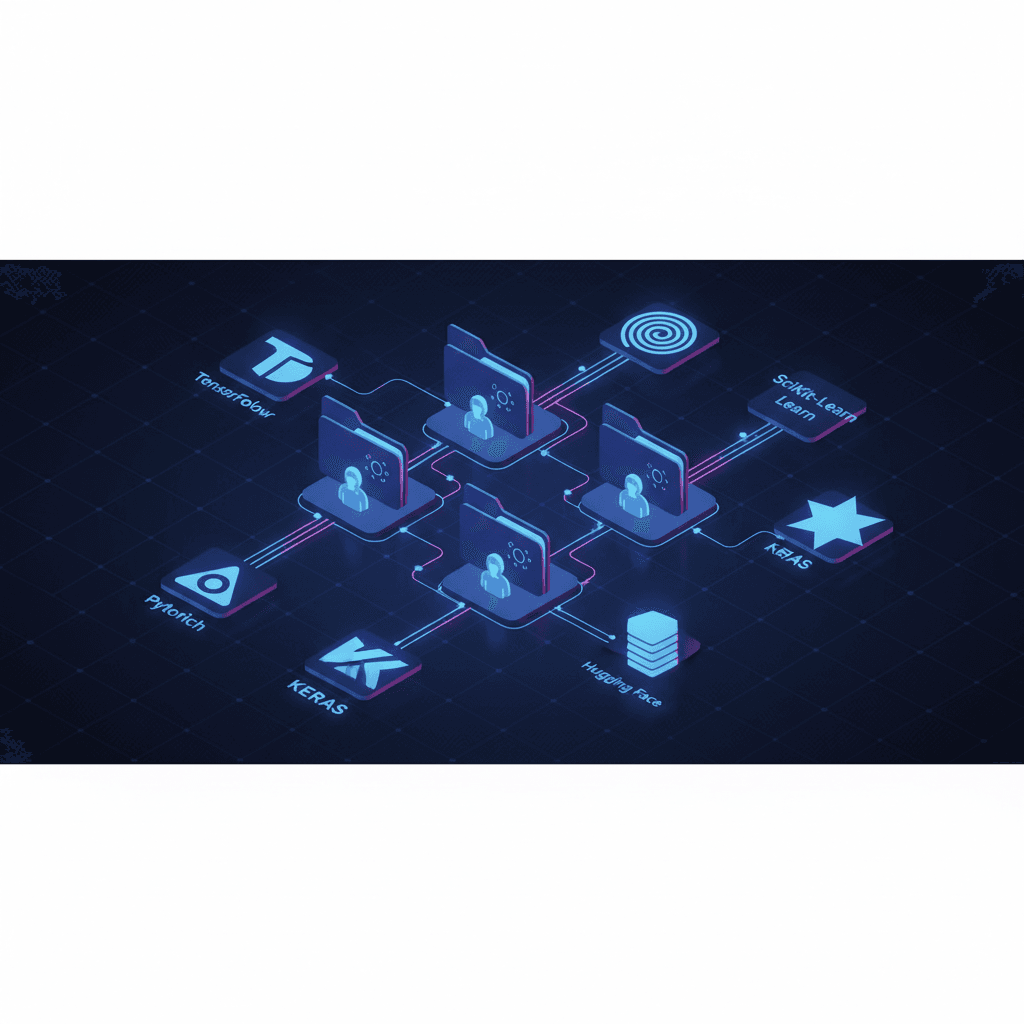
By GitAgent claims your Git repo can be the universal AI agent definition. The question is whether "define once, export everywhere" actually holds up when each target framework handles orchestration, memory, and tool execution so differently.
The project, released as an open-source MIT-licensed spec and CLI tool, introduces a file-based standard for describing AI agents that decouples identity and capabilities from any specific runtime. You define an agent as a directory structure inside a Git repository, two files minimum: agent.yaml (manifest with model provider, versioning, dependencies) and SOUL.md (personality, instructions, tone). Then you run gitagent export and get output formatted for Claude Code, OpenAI Agents SDK, CrewAI, LangChain, Google ADK, or several others. Eight adapters ship today.
The pitch is "Docker for AI agents." Docker solved container portability across deployment environments. GitAgent wants to solve agent portability across orchestration frameworks. It is a useful analogy, but the boundaries of what actually ports deserve scrutiny.
What the spec actually defines
A GitAgent repository follows a prescribed folder structure. Beyond the two required files, optional directories handle skills (modular capability definitions), tools (MCP-compatible YAML schemas for external integrations), rules (hard constraints and safety boundaries), memory (human-readable Markdown files like dailylog.md and context.md), knowledge (reference documents), and workflows (deterministic multi-step YAML pipelines with dependency ordering).
The memory approach is worth calling out specifically. Rather than storing agent state in vector databases or framework-proprietary formats, GitAgent keeps everything in Markdown files inside a memory/runtime/ subdirectory. This makes agent state readable with cat, diffable with git diff, and reversible with git revert. For anyone who has tried to debug why an agent started behaving differently after a memory update, the appeal is immediate.
Sub-agents get their own nested directories with their own agent.yaml and SOUL.md, enabling hierarchical compositions. The project includes a worked example based on NVIDIA's AIQ Deep Researcher, a three-agent hierarchy (orchestrator, planner, researcher) that produces cited research reports, ported into the GitAgent format.
Git as the supervision layer
The more interesting design decision is treating Git itself as the human-in-the-loop mechanism. When an agent updates its memory or acquires a new skill during runtime, the system can create a branch and open a pull request. A human reviewer sees the diff of exactly what changed in the agent's behavior or knowledge, approves or rejects it, and merges. If an agent drifts from its intended persona or starts producing problematic outputs, git revert rolls it back to a known-good state.
This maps CI/CD practices onto agent lifecycle management: branch-based promotion from dev to staging to production, tagged releases for pinning stable versions, git blame for tracing who changed what and when. The GitAgent CLI includes a validate command designed to run in GitHub Actions, blocking bad merges and enforcing schema compliance on every push.
According to the project's Hacker News launch post, which collected 147 points and 39 comments, the team also ships a public registry at registry.gitagent.sh for browsing and sharing agent definitions. The vision is something like Docker Hub for agents: fork a public agent, customize its SOUL.md, add your own skills, and contribute improvements back upstream.
What ports and what doesn't
This is where practitioners should pay close attention. The GitAgent spec explicitly distinguishes between what transfers across frameworks and what stays framework-specific.
What ports: system prompts, persona definitions, hard constraints, tool schemas, role and segregation-of-duty policies, model preferences. These are the declarative, configuration-layer elements that every framework needs in some form.
What doesn't: runtime orchestration (state machines, graph wiring in LangGraph), live tool execution, memory I/O mechanics, iterative loops. The actual execution logic remains framework-native.
So the "Docker" analogy has a clear boundary. GitAgent ports the agent's identity, not its runtime behavior. If you have built a complex LangGraph state machine with custom routing logic, exporting to CrewAI will give you the agent's personality and tool definitions but not the orchestration graph. That is an honest tradeoff, and the project is upfront about it, but it means the portability story is strongest for agents whose complexity lives in their prompts and tool configurations rather than their execution flow.
The compliance angle
GitAgent includes an optional compliance layer targeting regulated industries, with explicit support for FINRA, SEC, and Federal Reserve regulation (SR 11-7). The core mechanism is Segregation of Duties defined in DUTIES.md and agent.yaml: you assign roles like maker, checker, executor, and auditor to different agents, define a conflict matrix specifying which roles cannot be held by the same agent, and the gitagent validate --compliance command catches violations before deployment.
For teams building agentic systems in financial services, where regulatory requirements mandate that the entity initiating a process cannot also approve it, this is a practical feature. The audit trail comes free from Git's own commit history.
Where this sits in the ecosystem
GitAgent comes from Lyzr, and the project launched on Product Hunt and Hacker News in mid-March 2026. The npm package is @open-gitagent/gitagent, installable globally, and the spec is published at gitagent.sh.
The question is whether this becomes an adopted standard or another spec in a crowded field. The agent framework landscape already includes MCP for tool interoperability and A2A for agent-to-agent communication. GitAgent occupies a different layer, the agent definition itself, but adoption depends on whether framework maintainers see value in accepting GitAgent-formatted inputs natively rather than through export adapters.
The Docker analogy is instructive here too. Docker succeeded partly because it solved a problem every developer experienced daily, and partly because it became an industry standard that cloud providers adopted. GitAgent solves a real problem (framework lock-in is genuinely painful for anyone who has tried to migrate an agent), but eight export adapters maintained by one team is different from native support across frameworks.
For practitioners, the immediate value is clearest in two scenarios: teams evaluating multiple frameworks who want to defer commitment, and regulated environments where Git-based audit trails and segregation of duties solve compliance requirements that would otherwise need custom tooling. The human-readable memory format and PR-based supervision workflow are independently useful patterns even if you never use the export feature.
The spec is MIT licensed and available on GitHub. Worth reading the SPECIFICATION.md directly if you are building agents professionally.
Kai Nakamura covers AI for The Daily Vibe.