 By
By I've been rooting for Lynx since before they had a working prototype. A scrappy French startup trying to build a standalone mixed-reality headset from scratch, with open-source software and genuine technical ambition? That's exactly the kind of company this industry needs more of. So writing this one stings.
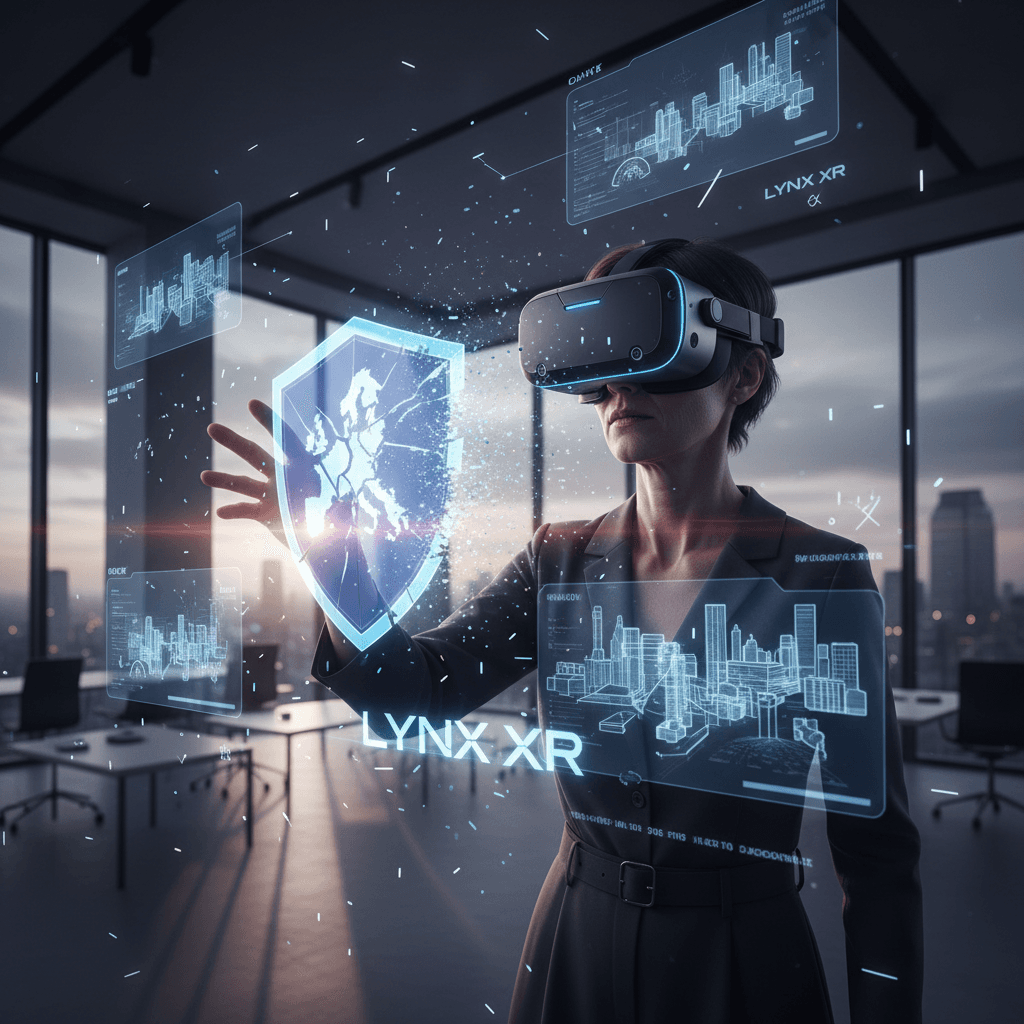
French court documents published on BODACC (the country's official bulletin for legal status changes) confirm that SL Process, the parent company behind Lynx Mixed Reality, entered judicial liquidation following a ruling by the Economic Activities Court of Nanterre on March 19, 2026. Under French insolvency law, judicial liquidation means restructuring has failed. The company's assets and intellectual property will be sold to cover debts.
What happened
The short version: Lynx ran out of runway.
CEO and founder Stan Larroque has described SL Process as a "shell company" parent to Lynx Mixed Reality, and it's unclear whether the Lynx Mixed Reality entity itself is affected by this filing. Road to VR reports they've reached out for comment but haven't heard back.
The bigger picture is hard to ignore. Lynx raised just $6.8 million total according to Crunchbase, plus roughly $800,000 from a 2021 Kickstarter campaign. For context, that's less than what some Bay Area startups spend on office furniture. Building hardware, writing an operating system, and shipping globally on that budget was always going to be a tightrope walk with no net.
Larroque said as much in mid-2024, calling the fundraising environment for XR hardware in Europe "excruciating."
The R2 that almost was
This is what makes it sting. The Lynx-R2 looked genuinely interesting on paper: 126 degrees of horizontal field of view using aspheric pancake lenses developed with Israeli startup Hypervision. Qualcomm Snapdragon XR2 Gen 2 processor, 16GB of RAM, 128GB storage, dual 2312x2160 LCDs at 90Hz, full-color passthrough with depth sensing. That FOV number would have been the widest of any standalone headset on the market. UploadVR's specs breakdown confirmed the hardware was real and competitive.
Then Google pulled the rug. In November 2025, Google terminated Lynx's agreement to use Android XR, the operating system that was supposed to give the R2 a real software ecosystem. Lynx called it a "surprising turn of events" and pivoted back to LynxOS, their open-source Android fork. Google confirmed it was still working with Samsung and Xreal but wouldn't comment on what happened with Lynx.
Losing Android XR was probably the kill shot. Hardware specs don't matter without apps, and building your own software platform from scratch requires the kind of resources Lynx never had.
The R1 foreshadowed this
The warning signs were there. Lynx-R1 launched on Kickstarter in 2021 as a roughly $500 consumer headset. Had it shipped on time in 2022, it would have beaten Quest Pro to market as the first consumer standalone with color passthrough. Instead, production delays pushed delivery into 2024 and beyond. By then Quest 3 and Apple Vision Pro had shipped. The R1's price climbed from $500 to $850 to $1,300 as the company pivoted to enterprise. Larroque himself admitted R1 production had been "an absolute mess."
None of that was because the team lacked talent or vision. It was because building consumer hardware requires capital that European VCs aren't willing to commit to XR right now.
Why this matters beyond Lynx
Lynx was one of the only European companies seriously attempting to build a standalone XR headset. The continent has optics researchers, display engineers, and software talent, but almost no one willing to fund the full stack of building a headset company from zero.
Meta spends more on Reality Labs in a quarter than Lynx raised in its entire lifetime. Samsung has Google's backing and a massive supply chain. Apple is Apple. For an independent European startup to compete in this market, the funding gap isn't something you overcome with scrappiness alone.
The Lynx-R2's specs showed that small teams can still innovate on optics and form factor. Those aspheric pancake lenses and that 126-degree FOV were real engineering breakthroughs. But innovation doesn't ship without cash, and the XR funding environment in Europe is, as Larroque put it, excruciating.
What comes next
The judicial liquidation process will likely see Lynx's assets, patents, and IP sold off. There's a slim chance another company acquires the technology and continues development, but that's optimistic.
Larroque's distinction between SL Process and Lynx Mixed Reality leaves a crack of ambiguity. Maybe the Lynx brand survives in some form. But even if it does, the R2 as originally envisioned is almost certainly dead.
For the rest of us watching, this is a reminder that the XR industry's consolidation around a few mega-companies isn't just a market trend. Every time a Lynx goes under, the ecosystem gets a little less diverse, a little less open, and a little more dependent on companies whose priorities may not align with what developers and users actually want.
I wanted to review the R2. I wanted it to ship. This one hurts.
Ren Wilder covers mixed reality for The Daily Vibe.