 By
By Netflix just shipped a Conversion API. Here's what that means for the measurement stack.
On March 4, Netflix announced its own CAPI tools as part of a broader Netflix Ads Suite expansion. The API is server-to-server, designed to let advertisers send conversion events directly to Netflix without routing through a browser. Early testing with Tinuiti, the largest independent full-funnel agency in the US, showed campaigns outperforming benchmarks by more than 75% across financial services, ed tech, and retail clients, according to Netflix.
That 75% number is doing a lot of heavy lifting in the press release. Netflix didn't disclose baseline benchmarks, sample sizes, or which specific metrics improved. Take it as directional, not definitive. But the signal is clear: Netflix is building a measurement product, not just an ad product.
Every platform now has a CAPI. That's the story.
Facebook launched the first major Conversion API in 2020. Google followed. Then TikTok, Snap, LinkedIn (which shipped its CAPI last year specifically to help advertisers retarget on CTV). Now Netflix and Roku both have them.
Here's how a CAPI works, step by step:
- An advertiser's server detects a conversion event (purchase, signup, app install)
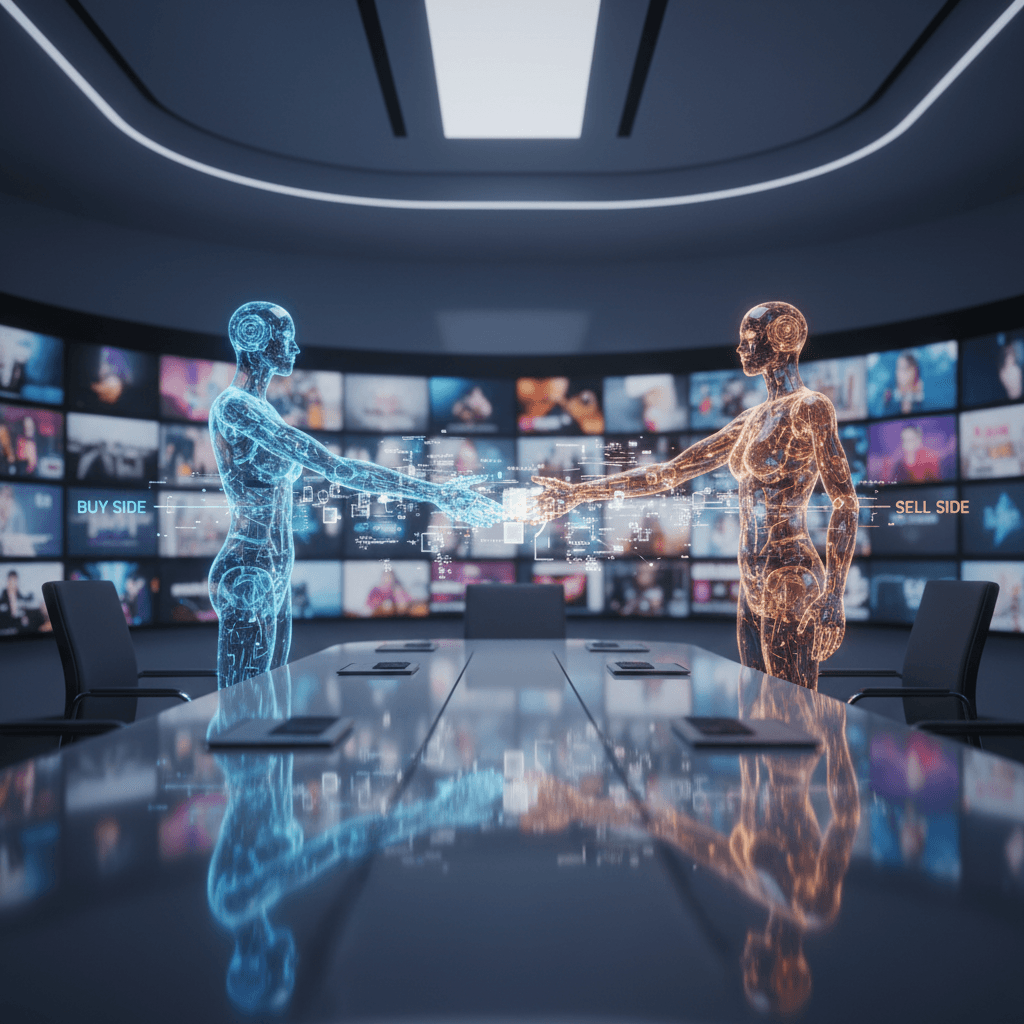
- The server sends that event directly to the ad platform's API endpoint, server-to-server
- The platform matches the event to an ad exposure using hashed identifiers (typically hashed email, phone, or device ID)
- The platform reports the attributed conversion back to the advertiser
No browser pixel fires. No third-party cookie dependency. No client-side JavaScript that ad blockers or browser restrictions can intercept. The entire data handshake happens between two servers.
This is why every platform has converged on the same architecture. When Apple's ATT gutted mobile signal in 2021 and browsers started restricting third-party cookies, CAPIs became the backup generator for attribution. Now they're the primary power source.
What broke, and what Netflix's CAPI actually fixes
The specific problem for CTV has always been worse than for display or social. There are no tracking pixels on TV screens. People don't click on their Roku remotes to visit a landing page. Traditional web attribution simply does not work in the living room.
Netflix's CAPI addresses this by letting advertisers connect their own first-party conversion data to Netflix's ad platform. If someone watches a Netflix ad for a DTC brand, then purchases from that brand's website two days later, the brand's server can report that purchase to Netflix, and Netflix can attribute it back to the ad exposure.
The catch: this only works if the advertiser has the technical infrastructure to send server-side events. According to Playwire's analysis, a publisher generating $2M annually in programmatic revenue could lose roughly $300K in measurable conversions without proper CAPI implementation. Budget 2-3 weeks per platform for integration if you have developer resources. Most mid-market publishers don't.
The panic phase is over. The engineering phase is here.
IAB Signal Shift NYC 2026, held earlier this month, was the industry's clearest declaration yet. As Lemma Media reported from the event: "The digital advertising industry has officially moved past the 'panic' phase of signal loss."
The IAB Tech Lab agenda centered on three pillars that map directly to where measurement is heading. Server-side execution through their "Trusted Server" initiative, which moves ad logic out of the browser entirely. Privacy-Enhancing Technologies like clean rooms and multi-party computation for attribution without raw data exchange. And the emerging "Agentic Web," where AI agents browse and transact on behalf of consumers, which is about to make the definition of an "impression" itself a lot more complicated.
Google's Enhanced Conversions became mandatory for many campaign types by mid-2024. That was the canary. Netflix's CAPI, Roku's CAPI, LinkedIn's CAPI, all arriving within months of each other, that's the confirmation that server-side is the new baseline.
What this means for the person running campaigns Monday
If you're buying Netflix inventory through Amazon DSP or Yahoo DSP (both now supported with expanded audience targeting as of the same March 4 announcement), you'll want CAPI integration on your roadmap for Q2 when US rollout begins.
If you're a publisher, the calculus is straightforward. Advertisers running Netflix campaigns will increasingly require CAPI-compatible measurement from their media partners. Publishers who support that server-side infrastructure get better measurement, better optimization, and ultimately more ad dollars. Publishers who don't will watch their attributed conversions quietly disappear from reports, as AdExchanger noted.
Prioritize your CAPI integrations by revenue concentration. Google and Meta first (if you haven't already, you're late). Netflix and Roku next if you're in entertainment, streaming, or subscription verticals. The technical lift per platform runs 2-3 weeks assuming you have developer resources available.
The measurement stack in 2026 is server-to-server by default. Browser-based attribution is the fallback, not the standard. Netflix just made that official for CTV.
Devon Park covers measurement and privacy for The Daily Vibe.