 By
By $1 billion. That's what OpenAI walked away from today.
On March 24, 2026, OpenAI confirmed it is discontinuing Sora — both the consumer app and the API — and pulling all video generation functionality from ChatGPT entirely. Six months after launch, the product is dead. And with it goes the deal that was supposed to anchor AI-generated content to Hollywood's most valuable IP: the Disney partnership is finished.
NBC News reported a source close to the situation saying "Disney's deal with OpenAI is not proceeding." The Hollywood Reporter confirmed: "Disney is also exiting the deal." What that deal looked like: a three-year license, access to more than 200 characters spanning Disney, Marvel, Pixar, and Star Wars properties, a planned $1B equity investment from Disney, and integration into Disney+. That's not a side project. That's a tent-pole partnership — the kind that gets announced on stage at industry conferences and then quietly falls apart in the back channels.
Here's what actually happened.
OpenAI head of applications Fidji Simo told staff to cut "side quests," per the Wall Street Journal via PYMNTS. Sora was a side quest. A compute-heavy, margin-thin, monetization-unclear side quest at a company burning approximately $15 billion in cash in 2026 while 95% of its 910 million weekly users aren't paying anything.
The official language from OpenAI was predictably careful: "We've decided to discontinue Sora in the consumer app and API. As we focus and compute demand grows, the Sora research team continues to focus on world simulation research to advance robotics that will help people solve real-world, physical tasks."
Robotics. Not entertainment. Not advertising. Not creative production for agencies. Follow the money — it points away from video.
Disney's response was diplomatically neutral: "As the nascent AI field advances rapidly, we respect OpenAI's decision to exit the video generation business and to shift its priorities elsewhere." Read that carefully. A $730B-valued company just told one of the most powerful entertainment brands in the world that the deal is off, and Disney responded with a corporate shrug. Neither side wanted to be holding this.
What this kills for the creative supply chain
For brand-side ad ops teams and agency creative strategists who were watching Sora as a potential production shortcut, that play is gone for now. The Hollywood Reporter notes Google is now "essentially the only player in the space with scale" for AI video. That's a significant shift in leverage. If you were building procurement conversations around AI video generation in 2026, you're back to a single vendor relationship, and that vendor now has considerably more pricing power.
For agencies that had Disney IP discussions baked into future creative briefs, those conversations need to restart from scratch with different partners, different licensing terms, and almost certainly higher costs.
Where OpenAI is actually putting the compute
The Sora shutdown isn't a retreat. It's a concentration of resources.
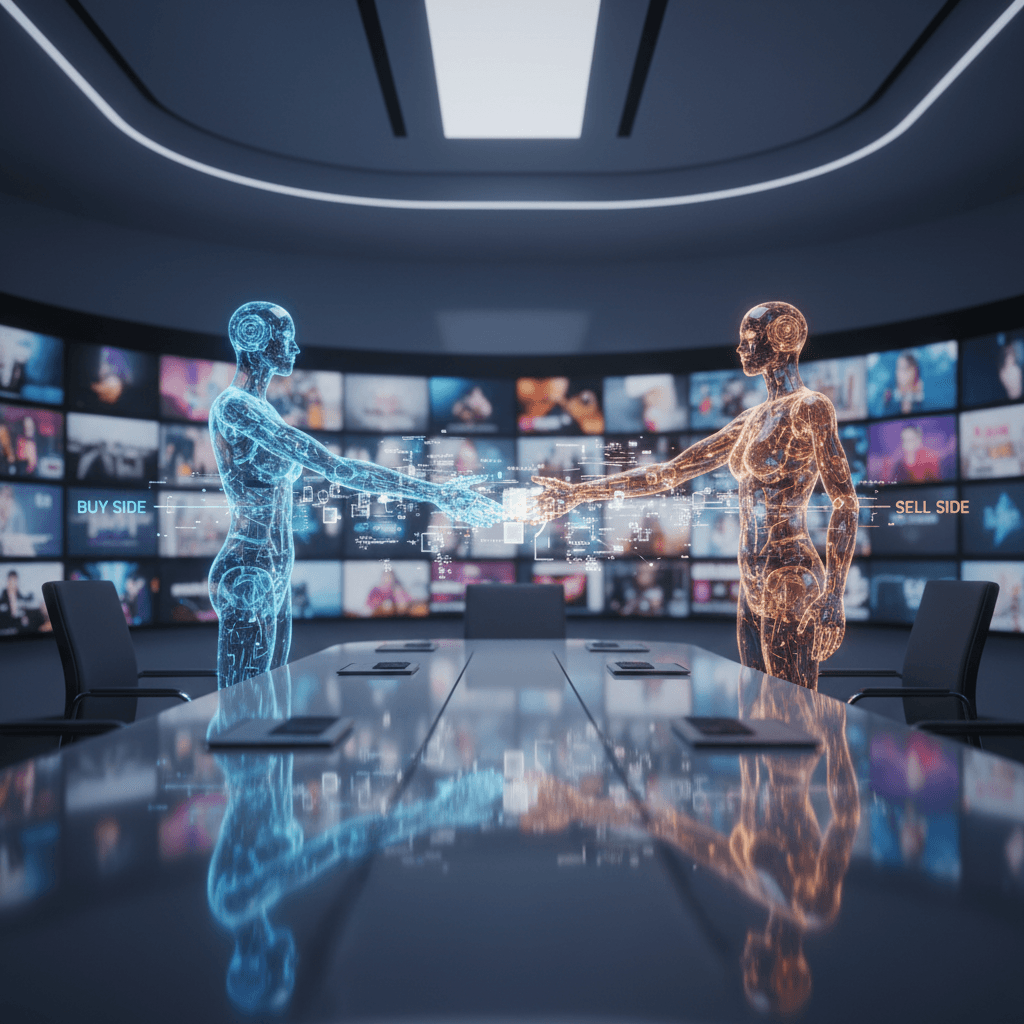
ChatGPT ads launched February 9, 2026. Three weeks later on March 2, Criteo announced it had become the first advertising technology partner for ChatGPT inventory, connecting roughly 17,000 advertisers to OpenAI's user base. For Criteo, already facing a $75 million revenue headwind from retail media client losses, this ChatGPT partnership is material. The margin tells the story: Criteo needed new demand badly, and OpenAI needed a programmatic on-ramp fast. That's a mutually convenient arrangement.
The Trade Desk is also reportedly in early talks with OpenAI to scale ChatGPT ad inventory, per eMarketer and The Information. That's two major DSPs circling the same supply. If both deals close, you have a bidding environment over access to 910 million users, the vast majority of whom OpenAI has never monetized.
Meanwhile, OpenAI is actively hiring a monetization infrastructure engineer, an engineering manager, a product designer, and a senior manager for ad revenue accounting. That last role matters. Ad revenue accounting is not a research function. That's infrastructure for a real revenue line.
Two expert views worth holding simultaneously. eMarketer analyst Nate Elliott: "If OpenAI wants to serve ads to 910 million users and make money sooner than later, buying rather than building ad tech is definitely their smartest play." W Media Research analyst Karsten Weide sees it differently: "OpenAI will choose to build their own ad stack because only that way they will be able to work with a platform that enables the 'new kind of advertising' that they envision, based on conversations with customers rather than other targeting data."
Both can be right in sequence. Buy to scale fast, build to differentiate later. That's a playbook the holding companies know well.
The Anthropic comparison is worth a moment. Anthropic never touched image or video generation. Claude Code soared in popularity, per NBC News, by staying narrow and focused on text and code. OpenAI is making a similar bet now, not because video is strategically wrong long-term, but because video generation is compute-expensive and hard to monetize through advertising at scale. The math doesn't work yet. Text-based conversational ad formats are where the near-term revenue lives.
The Monday morning read
If you're running a trading desk or managing programmatic buys for a major brand, here's what changed today.
Google DeepMind is now the only scaled AI video supplier in market. That gives them significant pricing power in conversations you'll be having soon. Start those conversations now, before the rest of the market does.
ChatGPT inventory is real and growing. Criteo has the first programmatic access. The Trade Desk may get the next. If you're not already talking to both about ChatGPT targeting and inventory access, you're behind the conversation.
OpenAI's ad business is being built for text-based, conversational ad formats rather than video. The creative workflows you've been imagining for AI video inside ChatGPT need to be retooled around a different format entirely.
And the Disney deal dying isn't just Hollywood news. It's a signal about how IP licensing meets AI infrastructure risk. The next time a publisher or IP holder structures an AI deal, they'll be watching for exits more carefully, and so should the agencies building integrated partnerships around those deals.
OpenAI raised $110 billion in fresh funding and is valued at roughly $730B. It just walked away from a billion-dollar entertainment partnership to focus on ad monetization. That's not a company in trouble. That's a company that finally knows exactly what it's optimizing for.
Zach El-Amin covers ad tech for The Daily Vibe.
This article was AI-generated. Learn more about our editorial standards.